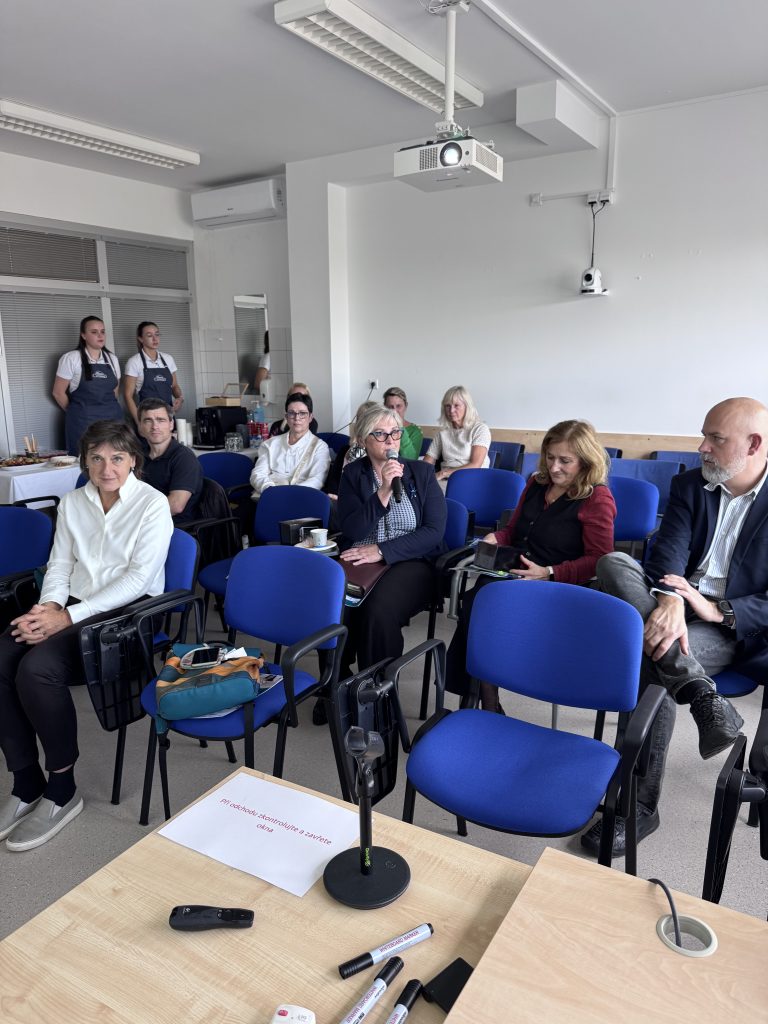
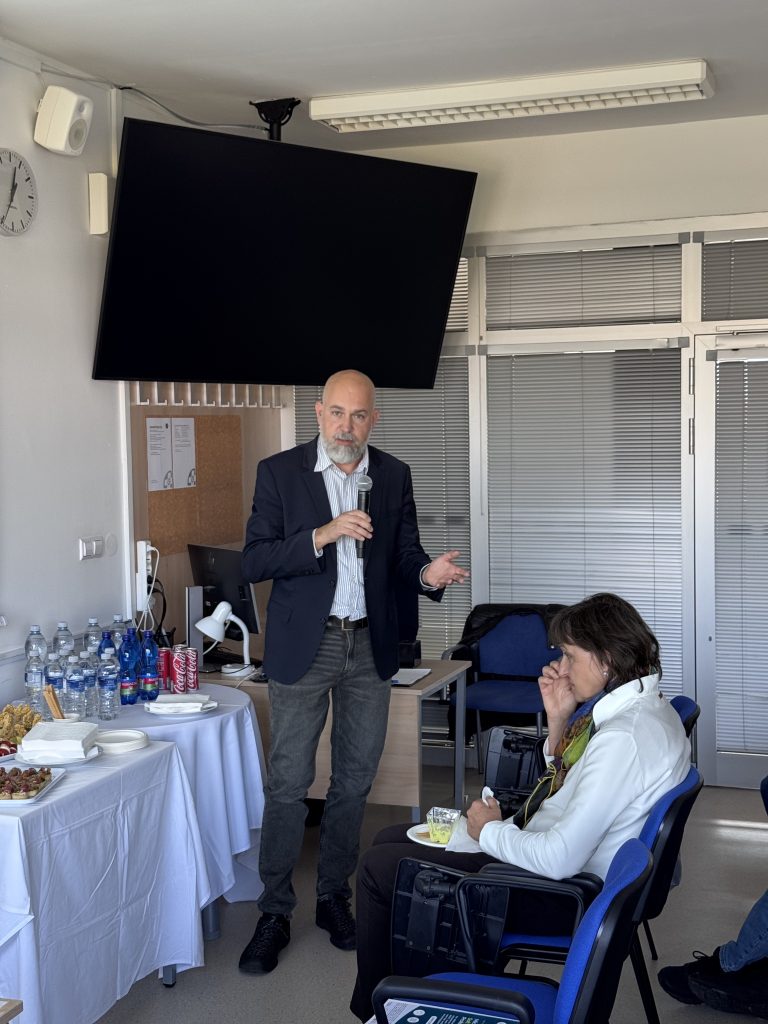
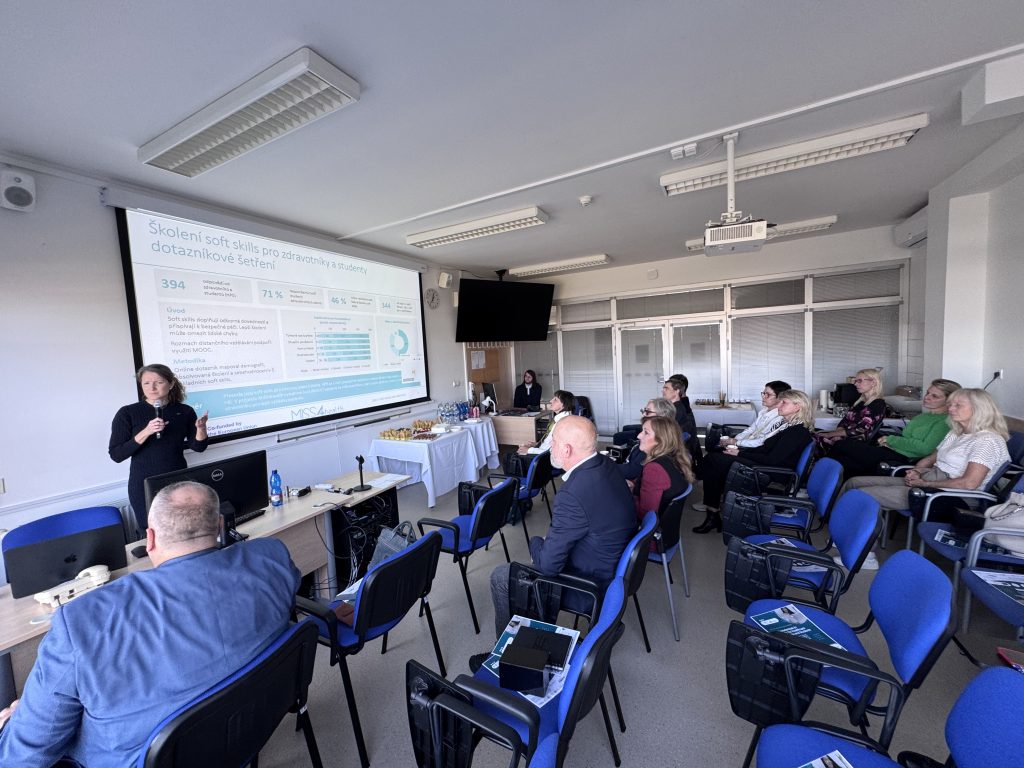
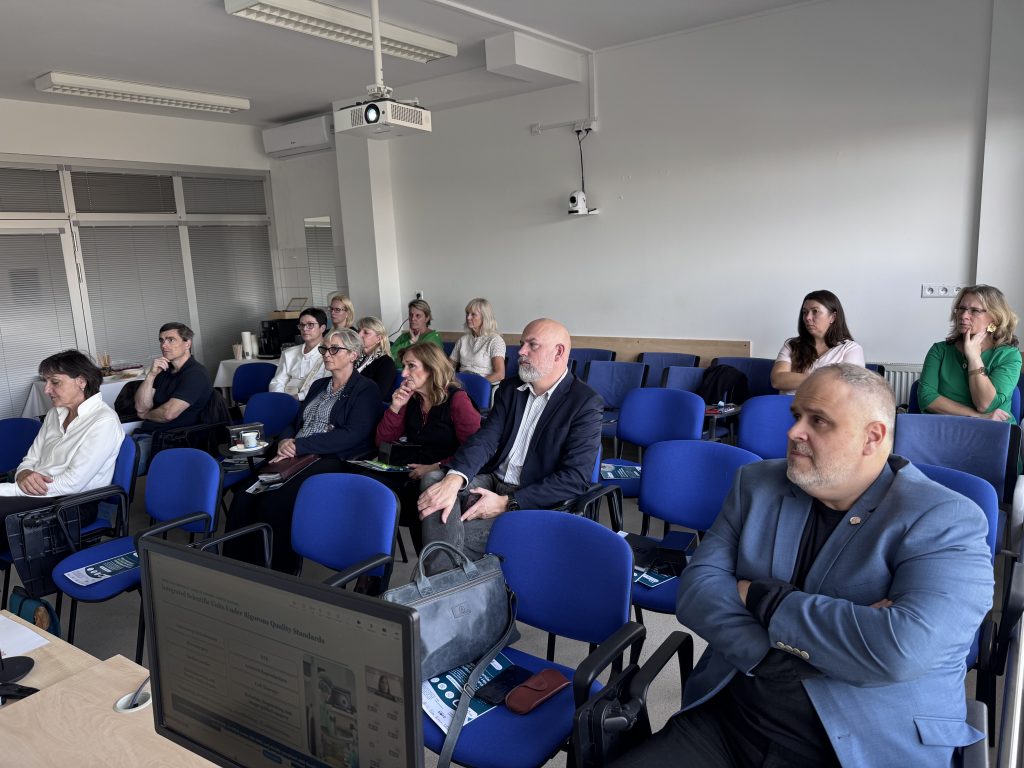
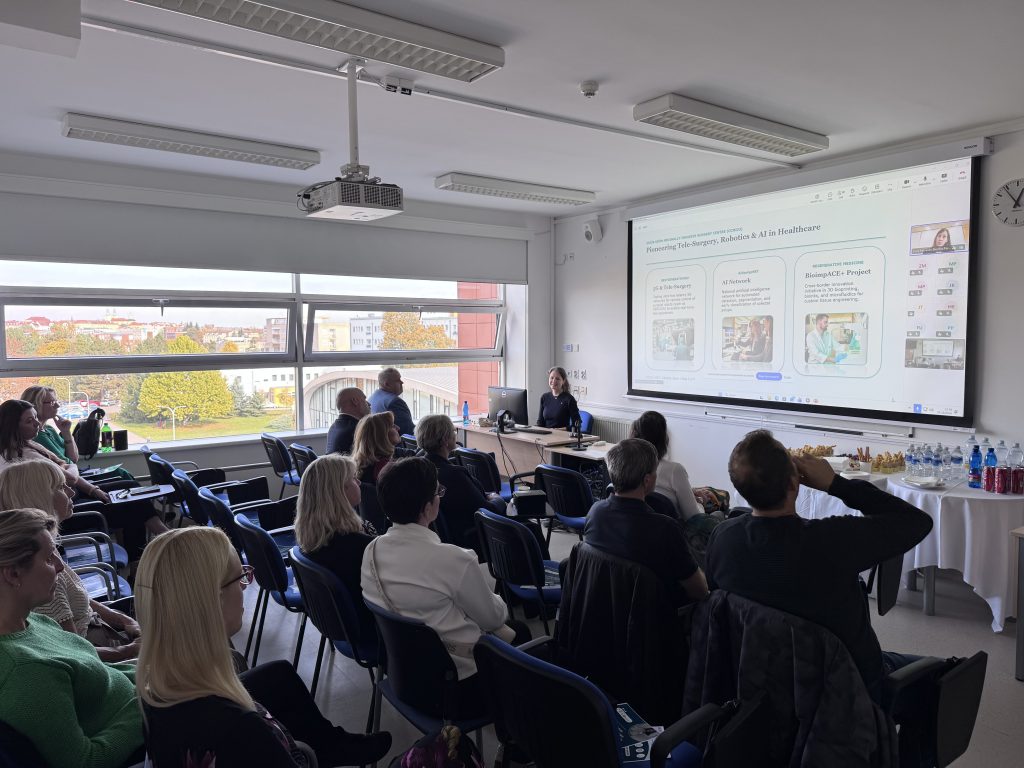
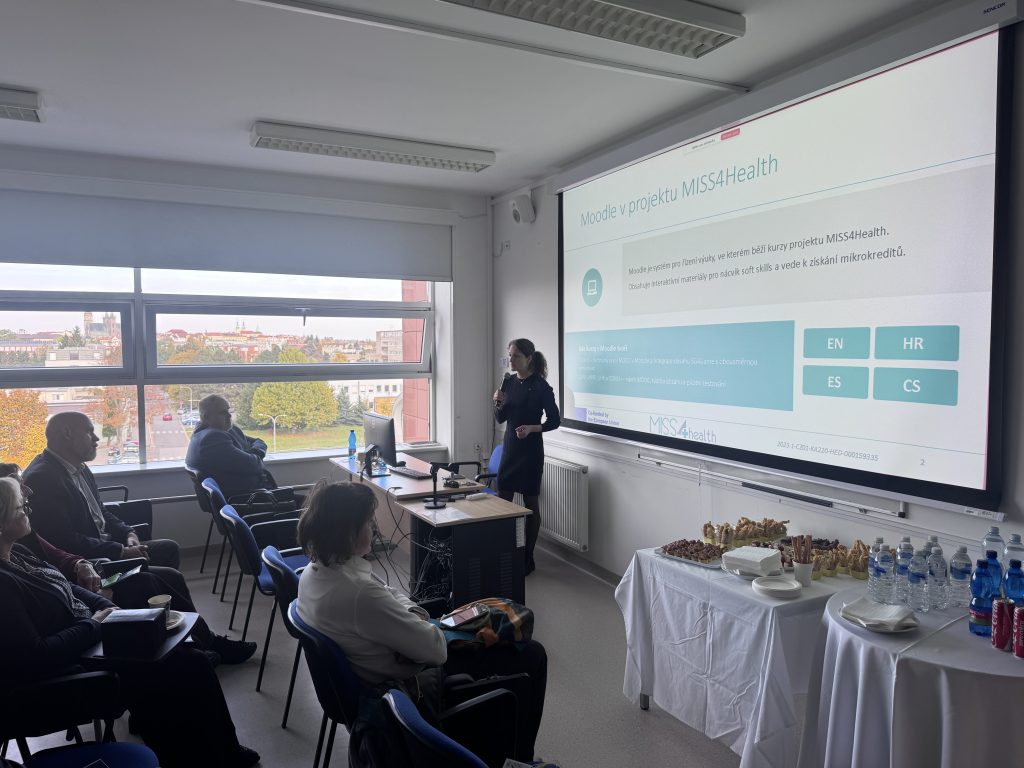
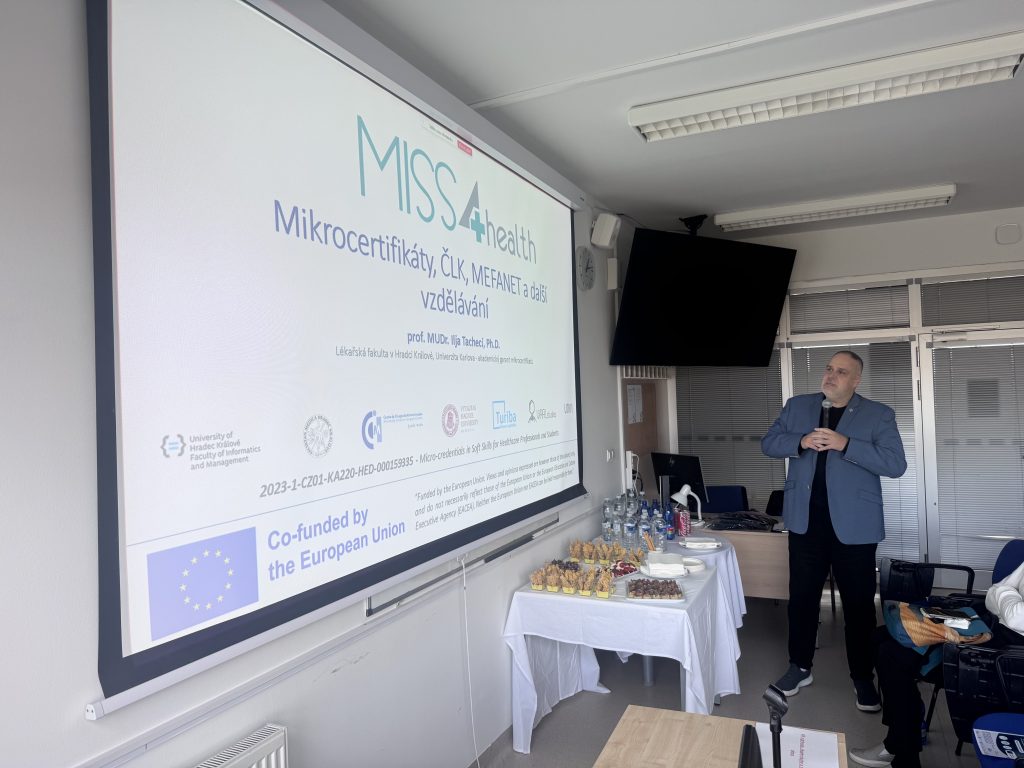
On 21 October 2026, the Faculty of Medicine in Hradec Králové, Charles University (LF HK), hosted the final workshop of the international project MISS4Health (registration number 2023-1-CZ01-KA220-HED-000159335). The workshop presented online courses and a system of micro-credentials for developing the soft skills of healthcare professionals and students. Participants discussed above all how to integrate the project results into teaching, lifelong learning and the day-to-day activities of healthcare facilities.
Communication with patients and their relatives, sharing bad news, teamwork and conflict management have a significant impact on the quality and safety of care. Even so, their systematic teaching does not always receive adequate space in the education of healthcare professionals. Since 2023, the MISS4Health project has addressed how to develop these skills through accessible, practice-oriented training.
The workshop was attended in person by the Dean of the Faculty of Medicine, Prof. Petr Hejna, MD, PhD, MBA. It was intended mainly for those who design, organise and apply the education of healthcare professionals in practice. Besides the Dean, the event was attended by Vice-Deans of the Faculty of Informatics and Management, University of Hradec Králové (UHK), the Vice-Dean for Non-Medical Study Programmes and the Head of the Department of Non-Medical Studies of LF HK. University Hospital Hradec Králové was represented by the Deputy Chief Nurse, the Head Nurse of the Department of Internal Medicine, the Head of the Education Department, a clinical practice mentor and the coordinator of student teaching.
The Department of Health of the Regional Authority of the Hradec Králové Region and the Czech Medical Chamber (ČLK) were also represented. The professional community was represented by the President and committee members of the Czech Society of Gastroenterology of the Czech Medical Association of J. E. Purkyně and by the Chair of the Endoscopy Section of the Czech Nurses Association. The perspective of other schools was provided by a representative of the Faculty of Health Studies, University of Pardubice, and a representative of the Secondary Medical School in Hradec Králové. Students were represented by a member of the Academic Senate of LF HK.
The MISS4Health project, funded by the EU Erasmus+ programme, brought together seven institutions from five countries. It was coordinated by the University of Hradec Králové. Charles University, through its Faculty of Medicine in Hradec Králové, contributed with its experience in teaching medical students and training physicians and led the work on the exploitation of project results.
The Jesús Usón Minimally Invasive Surgery Centre (CCMIJU) in Cáceres, Spain, was responsible for content development, testing and dissemination of results. Vytautas Magnus University in Kaunas, Lithuania, brought its experience with the introduction of micro-credentials and co-led the curriculum design. The University of Rijeka, Croatia, took part in content development and pilot testing, Turiba University, Latvia, in the technical assurance of the courses, and the Spanish company Viral Studios in the integration of simulation games. The cooperation between LF HK, UHK, CCMIJU and Viral Studios also built on the previous Erasmus+ project S4Game, which produced training scenarios in virtual reality.
A questionnaire survey among healthcare professionals and students of health-related disciplines, conducted independently of the course development, yielded 394 responses, 71% of them from students. Almost half of the respondents (46%) had never received any soft skills training. At the same time, 344 respondents expressed interest in such training; 138 of them would take part only if they obtained a certificate. The project courses focus on five areas that are particularly important in acute clinical practice: communication, teamwork, situational awareness, decision-making and team leadership.
Five individual courses and a comprehensive programme, Soft Skills in Clinical Practice, were prepared, each in Czech, English, Spanish and Croatian version. These programmes were submitted for registration at Charles University. A micro-credential certifies specific learning outcomes assessed against predefined criteria.
The individual courses are designed with a workload of five ECTS credits, i.e. 125 hours of study. Of these, 50 hours are devoted to theoretical multimedia lessons in the Moodle environment, 50 hours to clinical scenarios in the form of educational simulation games (serious games) and 25 hours to self-study. In the game scenarios, the participant acts as a team member or team leader and practises decision-making in specific clinical situations.
The courses are delivered fully online and asynchronously, i.e. without the need to connect and study at a fixed time. Assessment combines continuous quizzes, a final test and practical scenarios.
The courses can be used in both undergraduate and postgraduate education. At LF HK they have been piloted within the elective course Virtual Case Studies and Digestive Endoscopy; the English version allows international students to take part. For practising physicians and those preparing for specialty board examinations, inclusion in the continuing medical education system of the Czech Medical Chamber is envisaged. The aim is that, once the relevant conditions are met, graduates will be able to obtain both a Charles University micro-credential and ČLK credits.
The courses are also applicable in the education of nurses, midwives, physiotherapists and other healthcare professions. They offer teachers and trainers ready-made scenarios and a methodology for soft skills teaching and simulation-based medical education. The materials and information on the micro-credentials are to be published within the MEFANET network, which links medical faculties in the Czech Republic and Slovakia.
In the subsequent discussion, participants addressed the recognition of micro-credentials in lifelong learning, the use of the courses in the onboarding of new hospital staff and the possibilities of joint teaching of medical and non-medical professions. Representatives of the schools and the hospital appreciated the open access to the educational materials and the modular structure, which makes it possible to select skills according to the needs of a particular department or profession.
The project team plan to develop the courses further and to cooperate with the institutions represented at the workshop. The organisers thank all guests for their participation and stimulating discussion, and Dean Prof. Hejna for his support of the project. Further information is available at miss4health.eu.
Prof. Ilja Tachecí, MD, PhD
2nd Department of Internal Medicine – Gastroenterology, Charles University, Faculty of Medicine in Hradec Králové, and University Hospital Hradec Králové
co-investigator of the MISS4Health project for the Faculty of Medicine in Hradec Králové, Charles University